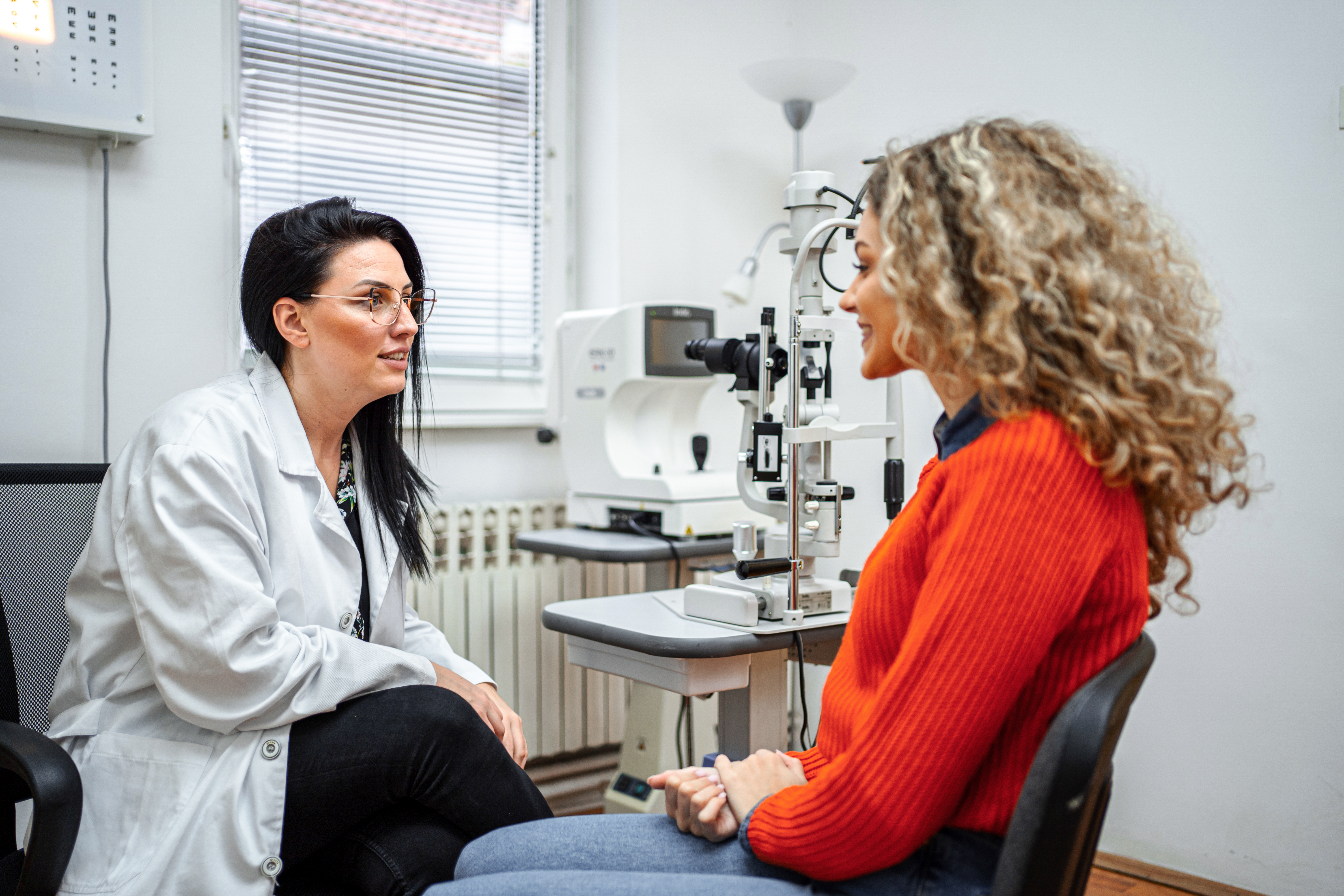
Our comprehensive eye exams are a fundamental pillar of overall healthcare. While the focus of these tests is on your vision, your eyes are also windows to many of the nerves, vessels, and tissues throughout your body. Problems found in the eye can sometimes be the first sign of a bigger issue lurking elsewhere in your body, and early detection is key in building the proper treatment plan.
If it’s been a while since your last eye exam, you may be wondering what to expect. Read on to learn more.
A common misconception about eye exams is that you only need one if your vision gets blurry. But comprehensive eye exams are much more than just prescription updates!
During an eye exam, your optometrist will perform a wide range of tests to determine the health of your eyes. You will be asked questions about your health history so that your doctor can customize the exam based on individual needs, but some of the most common aspects of a comprehensive exam are below.
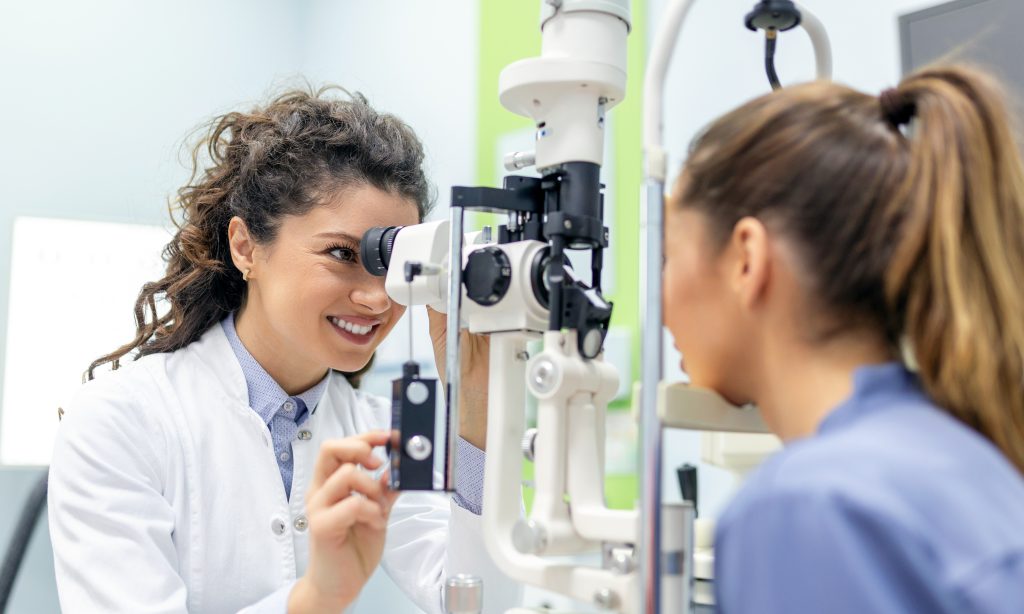
Determines your level of hyperopia (farsightedness), myopia (nearsightedness), and presbyopia (often experienced after age 40 and requiring reading glasses). Refraction helps your doctor determine your Rx.
Screens for your ability to distinguish between different hues and color families. Your doctor will show you a circle made of different color dots to see if you can discern the pattern within it, testing acuity across the color spectrum
Determines how well your eyes can follow moving objects and refocus on them. This type of test can aid in the detection of weakness or other problems related to the ocular muscles.
Measures depth perception and ability to view 3-dimensional objects for a more complete picture of your overall vision. These tests can help diagnose conditions such as amblyopia (commonly called lazy eye).
Also called the puff test, this screening measures the pressure in each eye to diagnose signs of glaucoma, an eye disease that can damage your optic nerve and lead to vision loss and blindness if left untreated.
Your annual eye exam is the perfect time to ask the optometrist anything and everything about your eyes. Our doctors are experts in their field and take pride in patient care. They can also offer recommendations on the best lenses and lens options for you.